
Keynote Speakers
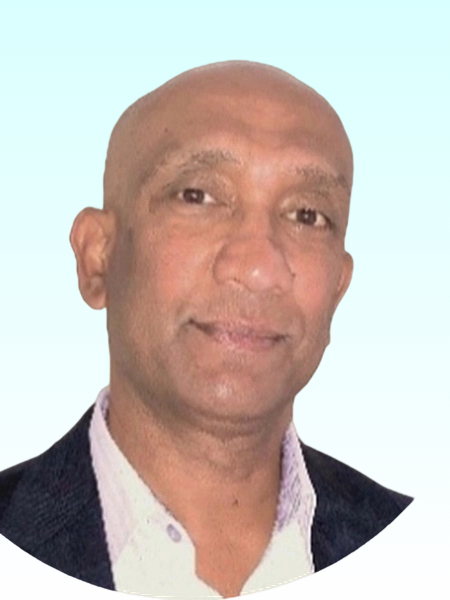
Prof. Udaya K. Madawala
University of Auckland, New Zealand
奥克兰大学,新西兰皇家科学院院士,IEEE Fellow
Udaya K. Madawala graduated with a B.Sc. (Electrical Engineering) (Hons) degree from The University of Moratuwa, Sri Lanka, and received his PhD (Power Electronics) from The University of Auckland, New Zealand as a Commonwealth Doctoral Scholar. At the completion of his PhD, he was employed as a Research and Development Engineer by Fisher & Paykel Ltd, New Zealand, to develop new technologies for PM motor drives. At present as a Full Professor in the Department of Electrical, Computer & Software Engineering at University of Auckland, New Zealand, he leads a group of researchers focusing on a number of power electronics projects that are related to energy and wireless EV charging systems for V2X applications.
Udaya is a Fellow of IEEE and Fellow of Royal Society New Zealand, and has both industry and research experience in the fields of power electronics and energy. He has served both the IEEE Power Electronics and Industrial Electronics Societies in numerous roles, relating to editorial, advisory, conferences, administrative & technical committees and chapter activities. He was the General Chair of the 2nd IEEE Southern Power Electronics Conference (SPEC)- 2016, held in New Zealand, and is also the Chair of SPEC Steering Committee and a Distinguished Lecturer of the IEEE Industrial Electronic Society. He is the recipient of the IEEE PELS Milan M. Jovanović Award for Power Electronics Emerging Technology and the University of Auckland Research Excellence Medal in 2024. Udaya, who has over 300 journal and conference publications, holds a family of global patents related to wireless power transfer (WPT) technology and power converters, and is a consultant to industry.
Speech Topic: TBA
Abstract: TBA
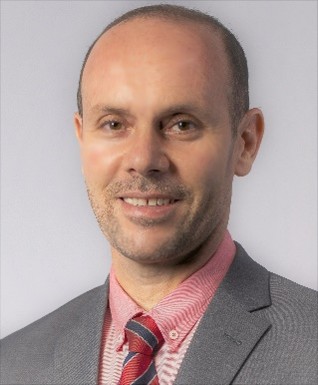
Prof. Saad Mekhilef
Swinburne University of Technology, Australia
Fellow of IEEE and IET, Distinguished Professor
Professor Saad Mekhilef is a Fellow of the IEEE and the IET. He is a Distinguished Professor in the School of Science, Computing and Engineering Technologies at Swinburne University of Technology, Melbourne, Australia; an Honorary Professor in the Department of Electrical Engineering at the University of Malaya; and a Distinguished Visiting Professor at the Institute of Sustainable Energy, Universiti Tenaga Nasional, Malaysia. He has authored and co-authored more than 800 publications in scholarly journals and conference proceedings, five books, and his work has received more than 72,000 citations. He has also supervised more than 85 PhD candidates to completion. Professor Mekhilef serves on the editorial boards of several leading journals, including IEEE Transactions on Power Electronics, IEEE Open Journal of Industrial Electronics, IET Renewable Power Generation, E-Prime, Journal of Power Electronics, and the International Journal of Circuit Theory and Applications. Professor Mekhilef has been recognised by Thomson Reuters and Clarivate Analytics as one of the world's Highly Cited Researchers in engineering, placing him among the world's top 1% of researchers in his field. He is also actively engaged in industrial consultancy with major corporations, particularly in the areas of power electronics and renewable energy systems.
Speech Topic: The Role of Power Electronics in Achieving a Modern Carbon-Neutral Society
Abstract: The global energy system is undergoing a major transition towards carbon neutrality, with renewable energy expected to dominate electricity generation and electricity playing an increasingly central role across end-use sectors. Power electronics (PE), as an application-oriented and interdisciplinary field, enables the efficient conversion, control, and management of electrical power through semiconductor-based switching technologies. By tailoring electrical energy to the optimal characteristics required for diverse applications, power electronics is fundamental to improving energy efficiency and supporting sustainable energy systems. PE-based power converters are widely deployed in both conventional and renewable energy systems, making them essential components in the development of a modern, low-carbon energy infrastructure. This presentation will discuss the principles and applications of power electronics, highlight its role in enabling renewable-energy integration and electrification, and examine the key future challenges facing the technology in achieving a carbon-neutral society that is expected to be predominantly electricity-based.
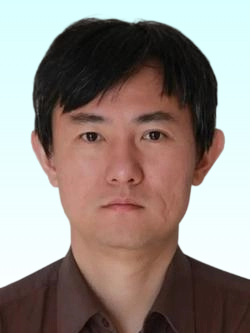
Prof. Xu Yang
Xi'an Jiaotong University, China
杨旭,西安交通大学,长江学者特聘教授
Xu Yang received the B.S. and Ph.D. degrees in electrical engineering from the Xi'an Jiaotong University, Xi'an, China, in 1994 and 1999, respectively. Since 1999, he has been a Member of the Faculty of School of Electrical Engineering, Xi'an Jiaotong University, where he is currently a Professor. From November 2004 to November 2005, he was with the Center of Power Electronics Systems, Virginia Polytechnic Institute and State University, Blacksburg, VA, USA, as a Visiting Scholar. He then came back to the Xi'an Jiaotong University, and engaged in the teaching and researches in power electronics and industrial automation area. His research interests include soft switching topologies, PWM control techniques, electromagnetic compatibility, power electronic integration, and packaging technologies.
Speech Topic: TBA
Abstract: TBA

Prof. Pinjia Zhang
Tsinghua University, China
张品佳,清华大学,国家杰出青年科学基金获得者
Pinjia Zhang (Senior Member, IEEE) received the B.Eng. degree in electrical engineering from Tsinghua University, Beijing, China, in 2006, and the master's and Ph.D. degrees in electrical engineering from Georgia Institute of Technology, Atlanta, GA, USA, in 2009 and 2010, respectively. From 2010 to 2015, he was with the Electrical Machines Laboratory, GE Global Research Center, Niskayuna, NY, USA. Since 2015, he has been with the Department of Electrical Engineering, Tsinghua University, as an Associate Professor. His research interests include condition monitoring, diagnostics, and prognostics techniques for electrical assets.
Speech Topic: TBA
Abstract: TBA
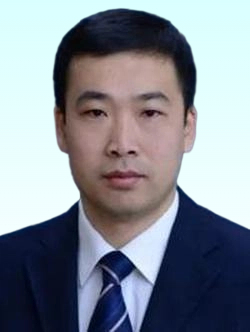
Prof. Gaolin Wang
Harbin Institute of Technology, China
王高林, 哈尔滨工业大学,国家杰出青年科学基金获得者
Gaolin Wang (Senior Member, IEEE) received the B.S., M.S., and Ph.D. degrees in electrical engineering from Harbin Institute of Technology, Harbin, China, in 2002, 2004, and 2008, respectively. In 2009, he joined the Department of Electrical Engineering, Harbin Institute of Technology, as a Lecturer, where he has been a Full Professor of electrical engineering since 2014. Dr. Wang serves as a Guest Associate Editor for IEEE Transactions on Industrial Electronics and an Associate Editor for IEEE Transactions on Transportation Electrification and IET Electric Power Applications.
Speech Topic: TBA
Abstract: TBA
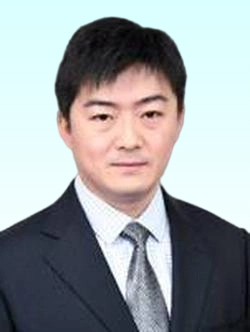
PROF. Feng Gao
Shandong University, China
高峰,山东大学,国家杰出青年科学基金获得者
Feng Gao received the Ph.D. degree in physical electronics from the Institute of Semiconductors, Chinese Academy of Sciences, Beijing, China, in 2016. She was with Hisense Broadband Multimedia Technologies Company Ltd., Qingdao, Shandong, China, where she worked on design and simulation of the high-speed DFB lasers from 2016 to 2021. She joined the School of Information Science and Engineering, Shandong University, Qingdao, in 2021, as an Associate Professor. Her research interests include semiconductor optoelectronic materials, devices, and photonic integrated circuits.
Speech Topic: TBA
Abstract: TBA